ServicesReverse Osmosis
Reverse Osmosis in West Milwaukee
We install under-sink reverse osmosis systems that give you filtered water from a small faucet at your kitchen sink. Use it for drinking, coffee and cooking. One person handles your job from the first call to the last wipe-down under the cabinet.
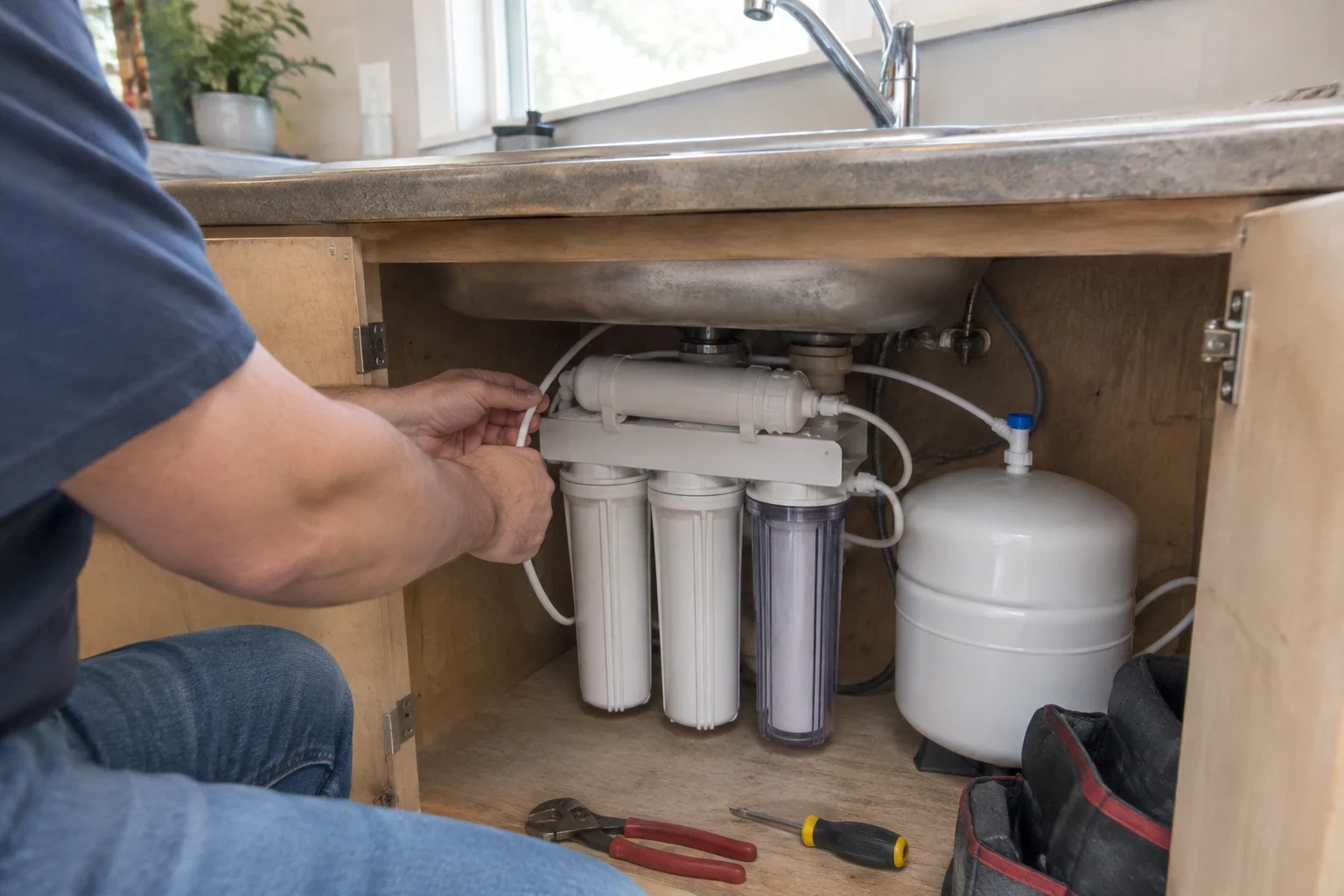
What reverse osmosis does for your home
An RO system forces water through a membrane with pores far smaller than a hair. Dissolved minerals, metals and a long list of other impurities can't pass, and the system rinses them to the drain. The water left over is clean and tastes like nothing at all, which is what you want in a glass or a pot of soup.
This is a point-of-use setup. It cleans the water at one sink, not every tap in the house. That keeps the equipment compact and easy to live with. It fits best when your main worry is drinking and cooking water. For filtered water at every faucet and the shower, see our whole-home filtration page.
A lot of houses in the area still have older pipes and fittings. If you wonder what those pipes might pick up before the water reaches you, an RO unit at the kitchen sink handles the water you actually swallow.
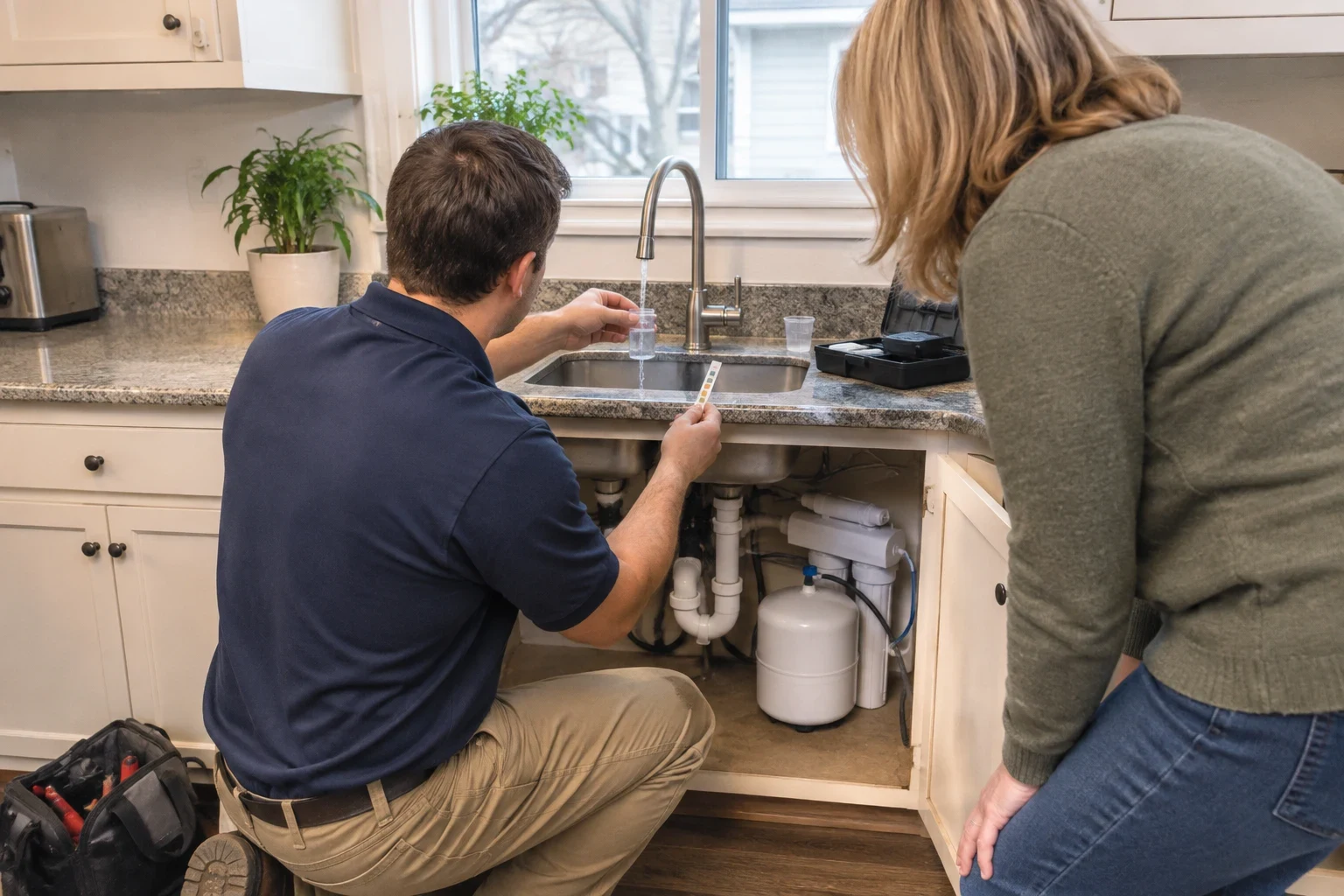
What comes with the install
- 01
Pre-filters and membrane
Water first passes a sediment filter for grit, then a carbon filter that strips out chlorine. Chlorine breaks down RO membranes, so these stages guard the most important part of the system.
- 02
Storage tank under the sink
An RO membrane works slowly, so a small pressurized tank keeps filtered water ready to pour. We measure your cabinet during the estimate and plan where the tank will sit before we price it.
- 03
A dedicated faucet
Filtered water comes out of its own small faucet on the sink deck or counter. An old sprayer or soap dispenser hole often works. If there isn't one, we drill a new hole and explain beforehand how we treat stone and quartz.
- 04
Drain and supply connections
The system tees off your cold water line, and the waste line runs to the sink drain. Every fitting gets snugged and watched for drips before we pack up.
- 05
Optional fridge or ice maker line
Want RO water from the ice maker or dispenser too? We can tie your refrigerator in. We check the path for the tubing at the estimate, so install day goes as planned.
- 06
Startup and walk-through
We flush the system, check the pressure, and show you where each filter is and how to close the supply valve.
Questions about Reverse Osmosis?
Call(414) 206-1098When an RO system is worth it
Bottled water piles up
If empty water bottles crowd your recycling every week, the RO faucet can take their place. You also skip hauling cases home from the store.
Tap water tastes off
City water can leave a chlorine or flat mineral taste in coffee and tea. The carbon filter and membrane remove most of it.
Older pipes in the house
Older houses may still have old solder, fixtures or service lines. RO pulls out most lead and other metals right at the faucet you drink from.
A pitcher filter is not keeping up
Pitchers fill slowly and burn through cartridges. An under-sink system has filtered water ready whenever you turn the handle.
Spots on glasses and kettles
White film on glassware and scale inside the kettle point to dissolved solids. RO water leaves much less of that behind.
How your RO job runs
- 1
The phone call
Whoever you speak with on that first call stays on your job start to finish. We ask what you want out of your water and set a time to look at the sink.
- 2
Look and quote
We check the room in the cabinet, the spot for the faucet, the drain and the cold line. Then you get a free written quote, good for 30 days.
- 3
Install day
Plan on a few hours for a typical install. We lay a mat down in the cabinet base, mount the filter housings and the tank, set the new faucet, then connect the supply and drain lines.
- 4
Flush, check and clean up
We flush the tank, then keep an eye on every fitting for drips and haul out our scraps. You pay in full once the install is done, never before.
What sets the price of an RO install
Kitchen sinks vary a lot, so we price the job after we've seen under yours. Your written quote lists the equipment and the labor on their own lines. If paying over time suits you better, you can finance the job through U.S. Bank Avvance, on approved credit.
- The model you choose
- A basic system with a storage tank costs the least. Tankless units, and units with a remineralizing stage that puts a little calcium back in for taste, cost more.
- Your countertop
- If the sink already has a spare hole, the faucet goes in quickly. Granite and quartz take a diamond bit and careful, slow drilling, and that time shows up on the quote.
- A line to the fridge
- Running RO water to the ice maker or door dispenser takes more tubing and more labor. It costs more again when the tubing has to go through a wall or along the basement ceiling.
- The shape of the cabinet
- A cramped cabinet, a tired shutoff valve or a corroded drain pipe may need work before the system goes in. Anything like that goes on the quote before you say yes.
Common questions about reverse osmosis
How often do the filters need changing?
Figure on fresh pre-filters and a fresh post filter about once a year. The membrane lasts a good deal longer, often several years, though a busy household wears it out sooner. We show you how to swap the filters on install day so you can handle it on your own.
Does RO waste a lot of water?
Yes, some water heads down the drain while the unit is making water. That flow rinses the membrane so it doesn't plug up. Since the system feeds just one faucet, the amount is small next to a shower or a load of wash.
Will it lower the water pressure at my sink?
Your regular kitchen faucet runs just like it did before. The little RO faucet pours a bit slower than a normal tap. That's normal for these systems and nothing is wrong.
Do I need a water softener too?
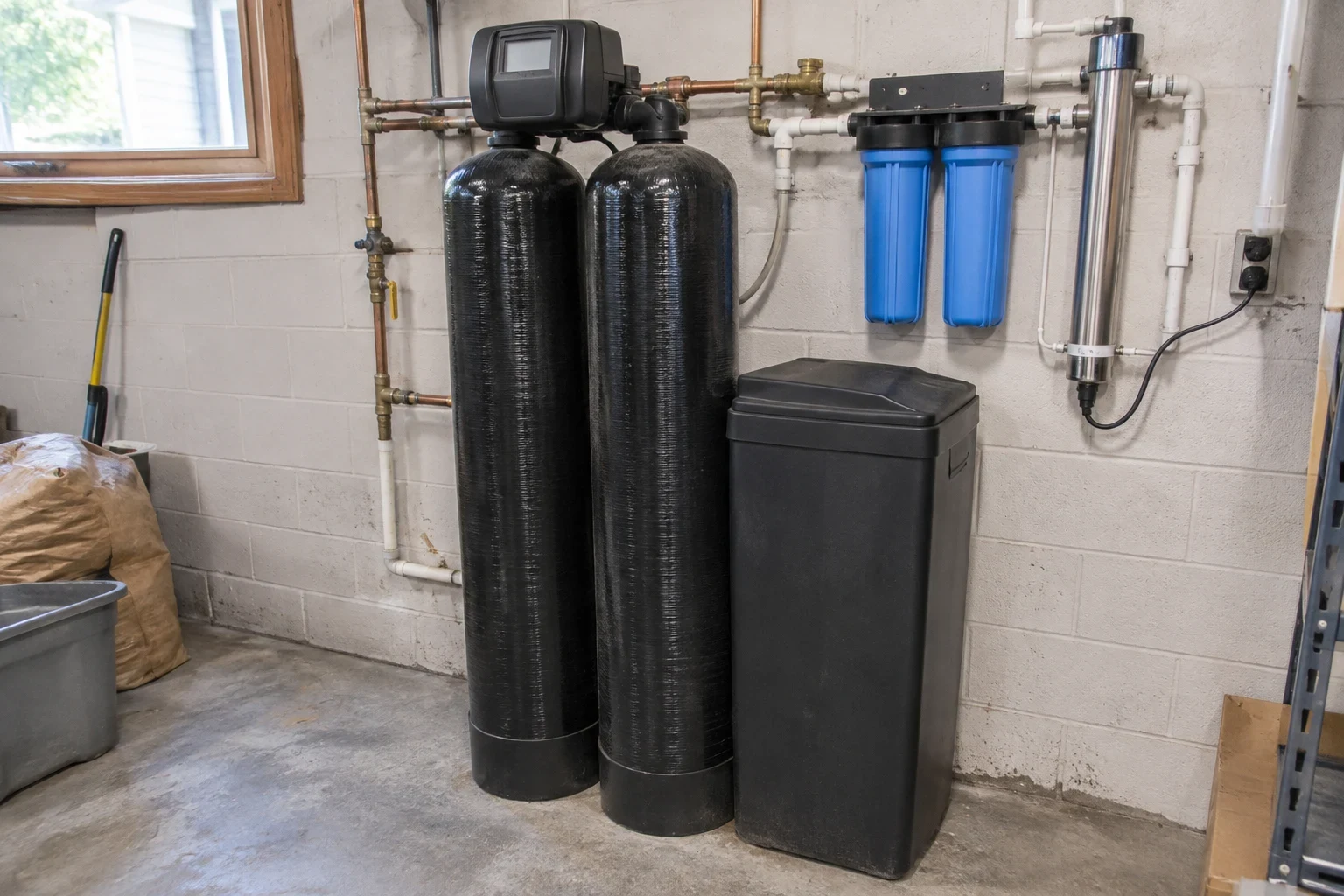
In a lot of homes, no. If hard water is scaling up fixtures all over the house, putting a softener ahead of the RO can help the membrane last longer. Our water softeners page explains more, and we'll give you a straight answer on whether it makes sense for you.
Can I back out once I've signed?
Yes. You have three business days from the day you sign to cancel. You also don't pay until the install is finished, so nothing is paid before the work is done.
Better water for the glass and the coffee pot
Give us a call and describe your sink setup and what bugs you about the water now. Whoever picks up stays with your job until the cabinet door closes.