ServicesWater Softeners
Water Softener Installation in West Milwaukee
We install water softeners that stop the scale on your faucets, your dishes and the inside of your water heater. One person handles your job from the first call to the final cleanup, so you always know who to ask. Payment is due only when the install is done.
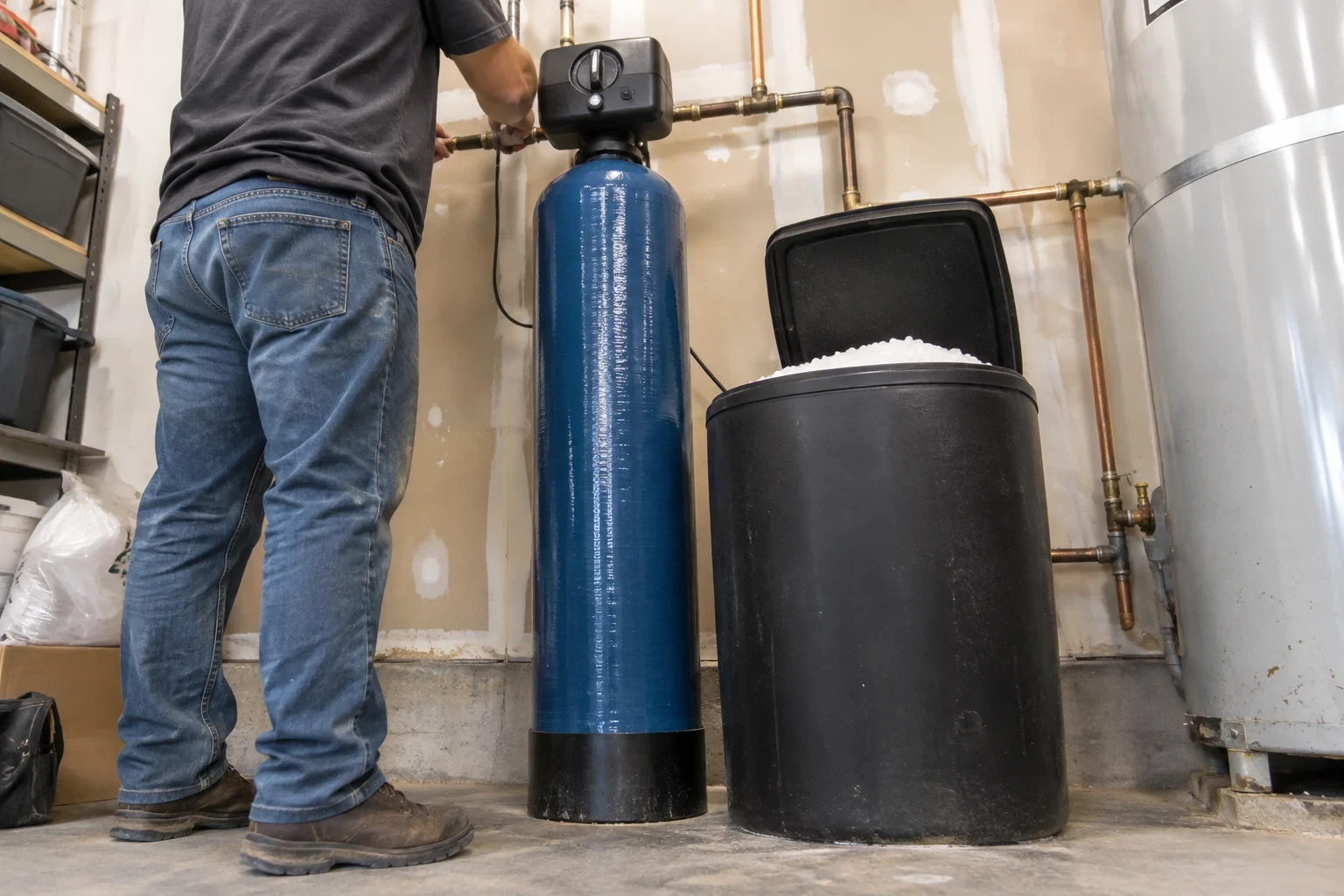
How a softener helps your home
Calcium and magnesium ride along in hard water. Heat makes them settle out as scale. On the outside, that's the chalky ring around a faucet or the haze on shower glass. On the inside, it collects at the bottom of your water heater, and the heater has to burn more energy to give you the same hot water.
Inside a softener is a tank full of resin beads that grab those minerals as water passes through. On a schedule set by your water use, the unit rinses the beads with a salt brine and sends the hardness down the drain. The water you get afterward feels smoother, and a little soap goes a long way.
Some homes don't need one at all. Your water utility puts out a yearly report that lists hardness, and we're happy to look it over with you by phone. If a softener isn't a good match, we'll tell you, and we can talk about whether whole-home filtration or reverse osmosis gets you what you want.
What your softener install covers
- Capacity matched to your home
- We choose the unit by your water's hardness and how many people live with you. Too small and it regenerates constantly and burns through salt. Too big and you've paid for capacity that never gets used.
- A control that counts gallons
- The valve we put in keeps track of the water you use and cleans the resin when it's due, not on a fixed calendar. That means less salt and less water sent to the drain.
- Bypass valve at the tie-in
- With a bypass, you can shut the softener out of the loop and still have running water everywhere else. Most homes can also have the outdoor spigots piped around the softener, so your garden hose stays on hard water.
- Drain line with an air gap
- Each cleaning cycle sends rinse water to a drain. We leave an air gap on that line so drain water can never be drawn back into the unit.
- First run and a quick lesson
- We fill the brine tank, set your hardness level and run the first cycle. Then we show you how to check the salt, which only takes a few minutes.
- Old unit out, floor clean
- If an old softener is sitting where the new one belongs, we disconnect it and haul it off. We clean up the work area before we load the truck.
Clues that hard water is a problem in your home
Chalky rings on fixtures
White deposits around faucets, on showerheads and at the bottom of the toilet tank are scale. Scrubbing only buys you a week or two.
Cloudy glassware
If glasses come out of the dishwasher hazy and plates have a white film, hard water is the usual cause. Switching detergent rarely fixes it.
Crackling from the water heater
Popping or rumbling while the burner runs often means scale has built up on the tank floor. The heater has to push heat through that layer, so it costs more to run and wears out faster.
Soap that barely foams
Shampoo and dish soap go fast because it takes so much to work up suds. Many people also notice dry skin after showering.
A softener that's lost its edge
The salt keeps disappearing, yet the spots and crust have returned. Tired resin or a worn valve is often to blame, and at some point replacing the unit beats fixing it again.
What happens from first call to final cleanup
- 1
You call and talk to one person
Whoever answers is the person who coordinates your job from start to finish. We talk about your water, where the main line comes into your home and what's bothering you. You can hear the financing details on that same call.
- 2
Your quote in writing
Equipment and labor are listed on separate lines, so you can see where the money goes. The price is good for 30 days. If you sign and then have second thoughts, you have three business days to cancel.
- 3
The install
We shut off the water, set the softener near the main line, add the bypass and run the drain. Before any of that, we tell you how long the water will be off so you can plan around it.
- 4
Startup, cleanup, then payment
We start the unit, go over the basics with you and clean up the area. Full payment is due once the install is done, not before.
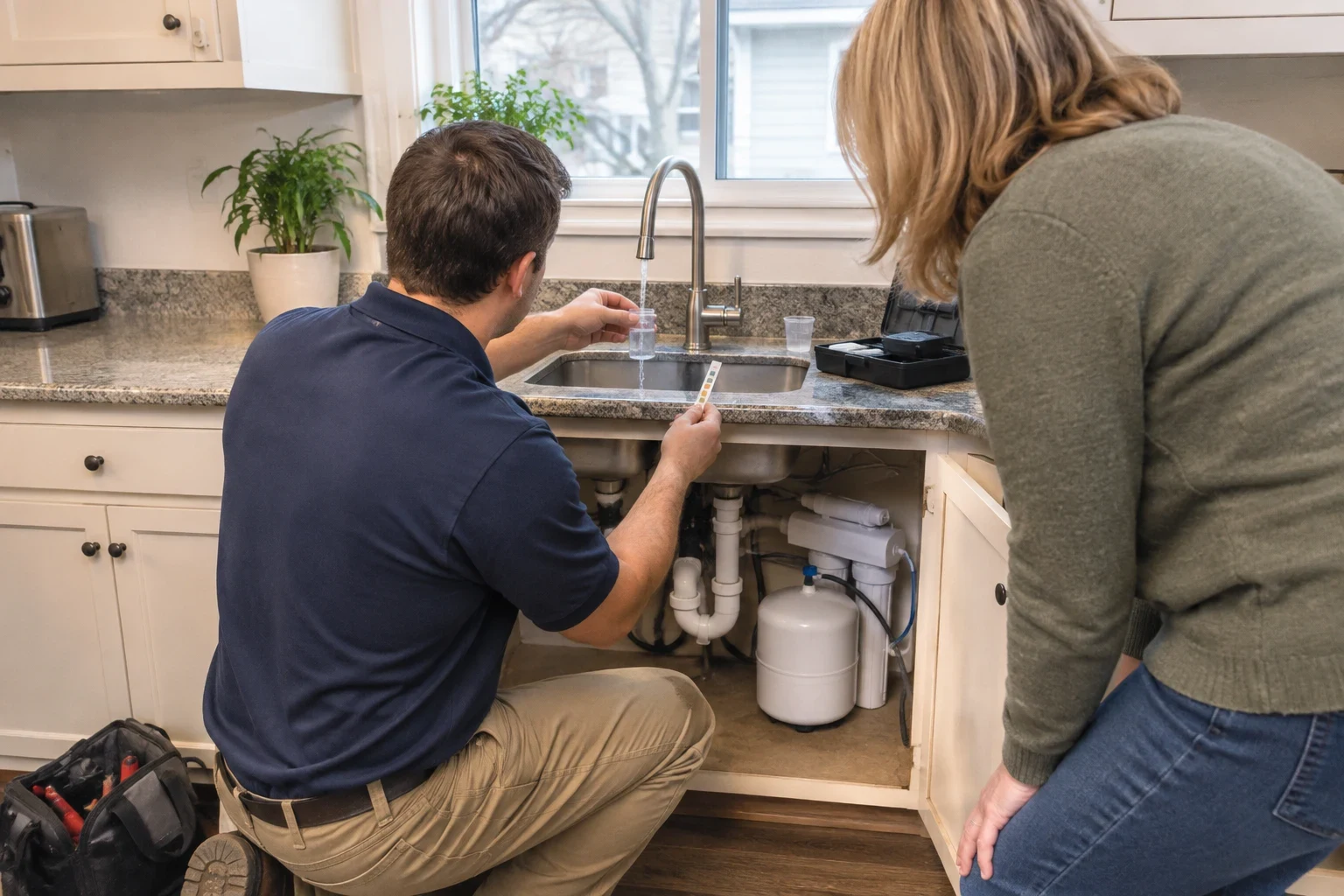
What sets the price of a softener
Every basement is plumbed a little differently, so we price your job after we know your water and your pipes. Most of the spread between one install and another comes down to a few things. If you'd rather pay over time, financing is offered through U.S. Bank Avvance, on approved credit.
- Hardness and household size
- Harder water and more people at home both mean the unit has to hold more. Sometimes that calls for a larger resin tank.
- Metered or timer control
- A valve that counts gallons costs a bit more at the start than a plain timer. Over the years it earns some of that back in salt you never have to buy.
- Where the unit sits
- The distance to a floor drain, the type of pipe on your main line and whether there's an outlet nearby all change how much labor the job takes.
- An old softener in the way
- Unhooking and hauling away a unit that's already there adds some time to the day.
- Iron and other well problems
- Some wells carry more iron than a plain softener should handle alone. Then well water treatment may go in ahead of the softener, and we quote the two together as one job.
Common questions about softeners
Something not covered here? (414) 206-1098
Does softened water taste salty?
No. The softener trades hardness for a small amount of sodium, and very few people can pick it out in a glass of water. If you want drinking water with less sodium, an under-sink reverse osmosis system at the kitchen tap takes most of it out.
How often will I be adding salt?
It depends on how hard your water is, how much your family uses and the size of the brine tank. A metered control only cleans the resin when it has to, so a bag of salt goes further. Before we leave, we show you where to look so you know when it's running low.
Is a softener worth it on city water?
Sometimes it is and sometimes it isn't. If a few spots on the dishes don't bother you, you can get by without one. If scale keeps coming back or is wearing out your water heater early, a softener takes care of that, and we'll give you a straight answer on whether it's worth the money.
Where in the house does it go?
Usually in the basement or a utility room, near where the main line comes in and close to a drain. We look at your plumbing and pick a spot that keeps the pipe runs short and tidy.
Will a softener fix chlorine taste or smell?
No. A softener only goes after hardness minerals. Whole-home filtration is what takes care of chlorine taste and odor, and both can be installed on the same visit.
Can I pay for it over time?
Yes. We offer financing through U.S. Bank Avvance, on approved credit. One phone call gets you the details, and we walk you through how it works before you decide anything.
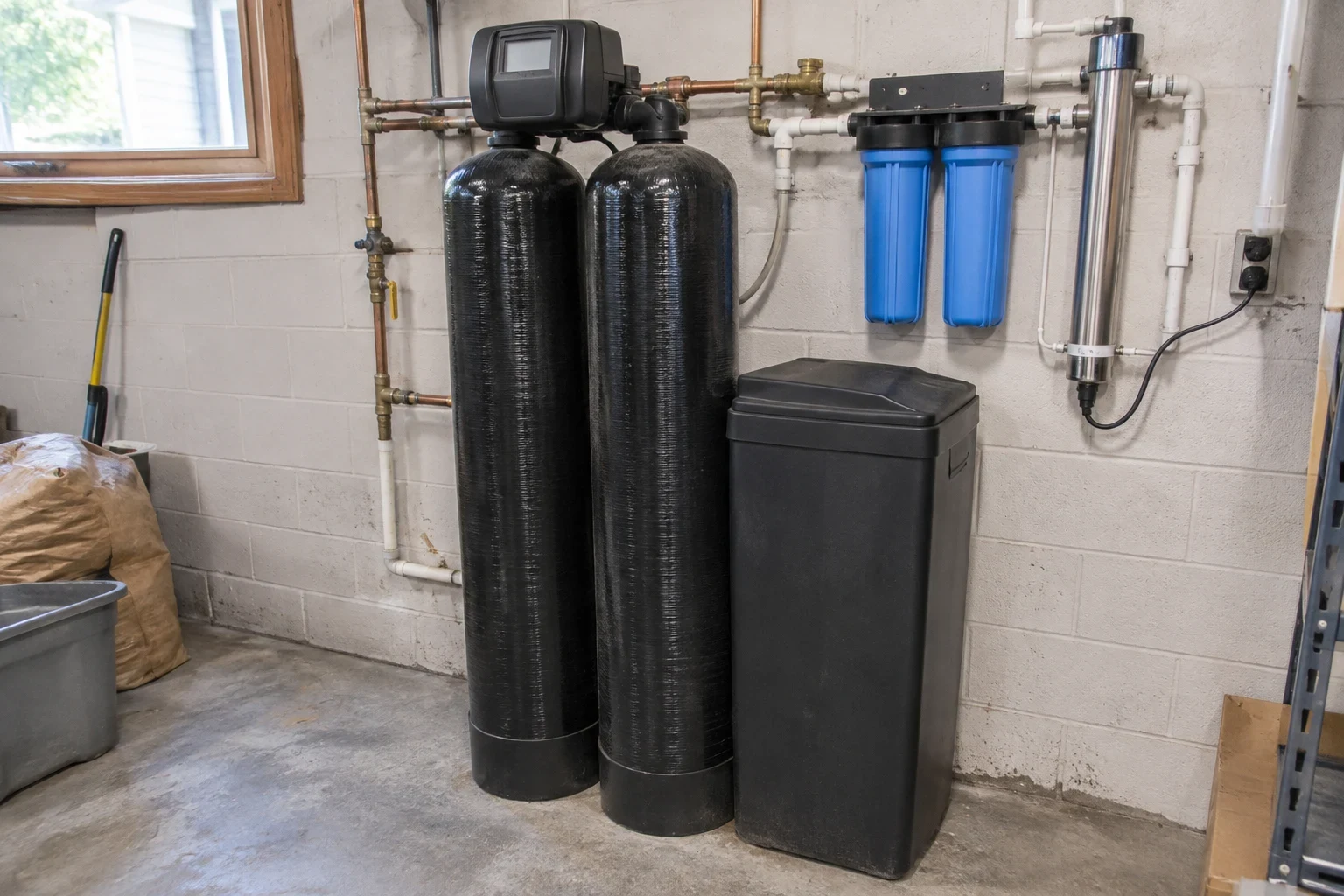
Talk to the person who will run your install
One call gets you a free quote and the financing details. The same person stays with your job until the area is clean and the softener is running.